7 Common Mistakes That Ruin Ceramic Coating (And How to Avoid Them)
So you invested in a ceramic coating. Your car looks incredible, water beads off the surface like magic, and the gloss is deeper than you've ever seen. But here's something most detailers won't tell you upfront: a ceramic coating is only as good as the way you take care of it.
At Shine Drive Detailing, we inspect dozens of ceramic-coated vehicles every month — and honestly, the same handful of mistakes show up again and again. Small habits that seem harmless are quietly stripping away hydrophobic performance, dulling gloss, and shortening the life of a coating that's supposed to last years.
Below are the 7 most common mistakes that ruin ceramic coatings, why they happen, and exactly how to avoid them.
1. Using Automatic Car Washes with Brushes
Brush-tunnel car washes are convenient — and they're one of the fastest ways to undo a ceramic coating.
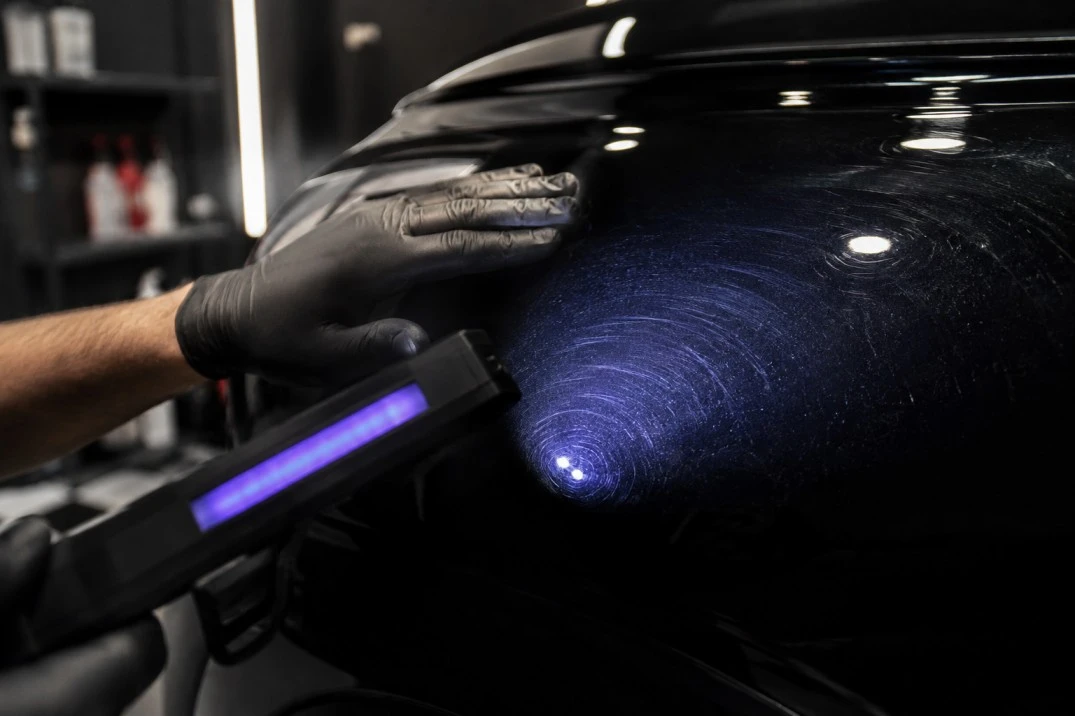
Those spinning brushes don't discriminate between your paint and the dirt, grit, and grime left behind by the last hundred cars that went through before you. Every pass drags that debris across your clear coat, creating:
- Swirl marks that dull the finish
- Micro-scratches that scatter light instead of reflecting it
- Coating degradation from repeated abrasive contact
The fix: Touchless washes are a safer alternative, but nothing beats a proper hand wash. Stick to a soft microfiber wash mitt and the two-bucket method (one bucket for soapy water, one for rinsing your mitt) to keep contaminants from grinding into your paint.
Want the full breakdown of how brush washes damage paint over time? Read our deep dive: Automatic Car Washes Are Slowly Destroying Your Paint.
2. Washing with Dish Soap or Harsh Chemicals
We get it — Dawn dish soap is sitting right there in the kitchen, and it's great at cutting grease. That's exactly the problem.
Dish soaps, household detergents, and strong degreasers are formulated to strip oils and residues completely. Used on a coated car, they strip away more than dirt — they gradually break down the protective layer itself, reducing the coating's hydrophobic (water-beading) performance over time.
Important to understand: Ceramic coating is chemical resistant, not chemical proof. It can handle everyday exposure, but repeated contact with harsh, high-pH cleaners will wear it down faster than expected.
The fix: Always use a pH-neutral car shampoo specifically formulated for coated or waxed vehicles. It's a small switch that makes a big difference in how long your coating performs. If you're not sure your current routine is coating-safe, our exterior detailing service uses coating-safe products on every visit.
3. Letting Bird Droppings, Tree Sap & Bug Splatter Sit
This is one of the most searched — and most misunderstood — ceramic coating topics, and for good reason.
Bird droppings are acidic. Left on a hot panel, that acid begins to etch into the surface almost immediately:
Bird droppings → Acid reaction → Etching → Permanent paint damage
Here's the part many owners don't realize: even a high-quality ceramic coating can't fully prevent etching if contaminants like bird droppings, tree sap, or bug splatter are left to sit for hours or days. The coating adds a layer of resistance, but it isn't invincible against prolonged acidic exposure.
The fix: Keep a quick-detail spray and microfiber towel in your car. The moment you spot bird droppings, sap, or bugs, gently remove them — don't wait for your next wash day.
4. Skipping Regular Washing
This might be the single biggest myth in the ceramic coating world:
"I got ceramic coating, so I never have to wash my car again."
This is false — and it's one of the fastest ways to disappoint yourself with a coating that "isn't working like it used to."
In reality, your coating is still exposed to:
- Road film
- Dust and pollen
- Brake dust
- Industrial fallout
Over time, these contaminants build up and clog the coating's surface, reducing water beading and gloss — even though the coating underneath is still intact.
Important to understand: Ceramic coating is self-cleaning only to a certain extent. It reduces how much dirt sticks and makes cleaning easier — it doesn't eliminate the need to wash altogether.
The fix: Wash every 2–3 weeks, even if the car "still looks clean." Consistency is what keeps that beading effect visible.
5. Washing Under Direct Sunlight
This one rarely crosses people's minds, but it makes a real difference in your results.
Washing a car in direct sun heats up the panels, which causes:
- Soap and water to dry before you can rinse it off
- Water spots from fast evaporation
- Mineral deposits left behind on the surface
If left untreated, those mineral deposits can etch into the coating and dull its appearance over time, undoing the crisp, glassy look ceramic coating is known for.
The fix: Wash early in the morning, in the evening, or in a shaded area. Cooler panels mean slower evaporation, better rinsing, and a spot-free finish.
6. Using Dirty Towels
This is one of the most overlooked causes of coating damage — and one of the easiest to fix.
Here's how the damage happens:
Old, dirty towel → Embedded grit and dirt → Dragged across paint → Scratches and swirl marks
A towel that's been dropped on the garage floor or used for months without proper washing is holding onto tiny abrasive particles. Every time you wipe your car down with it, you're essentially sanding the surface at a microscopic level.
The fix:
- Use premium, high-quality microfiber towels
- Keep separate towels for washing, drying, and product application
- Wash your microfiber towels regularly, separately from other laundry, and skip fabric softener (it clogs the fibers)
7. Never Inspecting or Maintaining the Coating
The final mistake is more about mindset than technique.
A lot of owners think:
"I paid $1,500 for this coating. I'm done — forever."
But ceramic coatings, like any protective system, benefit from ongoing attention. Skipping maintenance is one of the fastest ways to lose the performance you paid for.
To keep a coating performing at its best, it helps to have:
- Regular inspections to catch early signs of wear or contamination
- Decontamination treatments (like clay bar or iron removers) to strip embedded grime the coating can't shed on its own
- Maintenance/booster products designed specifically for ceramic-coated surfaces
- Top-up protection applied periodically to refresh hydrophobic performance and gloss
Think of your ceramic coating less like a one-time purchase and more like an investment that needs occasional check-ins to keep paying off.
Final Thoughts: Protect the Investment You Already Made
Ceramic coating is one of the best things you can do for your car's paint — but it isn't a "set it and forget it" solution. The difference between a coating that looks incredible for 5 years and one that fades in 12 months almost always comes down to these seven habits. A well-maintained coating also pays off beyond curb appeal — see how it factors into whether detailing actually increases your car's resale value.
If you're not sure what condition your coating is currently in, or it's been a while since your last inspection, Shine Drive Detailing can help. We offer professional exterior detailing with safe decontamination washes and maintenance treatments designed to extend the life of your coating and keep that showroom gloss intact.
Book a ceramic coating maintenance check with Shine Drive Detailing today and make sure your investment is protected the right way.
Ready to Experience Professional Car Detailing?
Don't wait to give your vehicle the care it deserves. Our expert detailing services will transform your car inside and out.
Related Articles
Automatic Car Washes Are Slowly Destroying Your Paint
Automatic car washes may seem convenient, but repeated exposure to dirty brushes and harsh winter contaminants can slowly damage your …
⚡ How to Keep Your Tesla (or EV) Looking New Through a Canadian Winter
Canadian winters are tough on Teslas and other EVs — salt, slush, and freezing temps can dull paint, damage sensors, …