Spilled Coffee in Your Car? Here's What to Do Before the Stain and Smell Set In
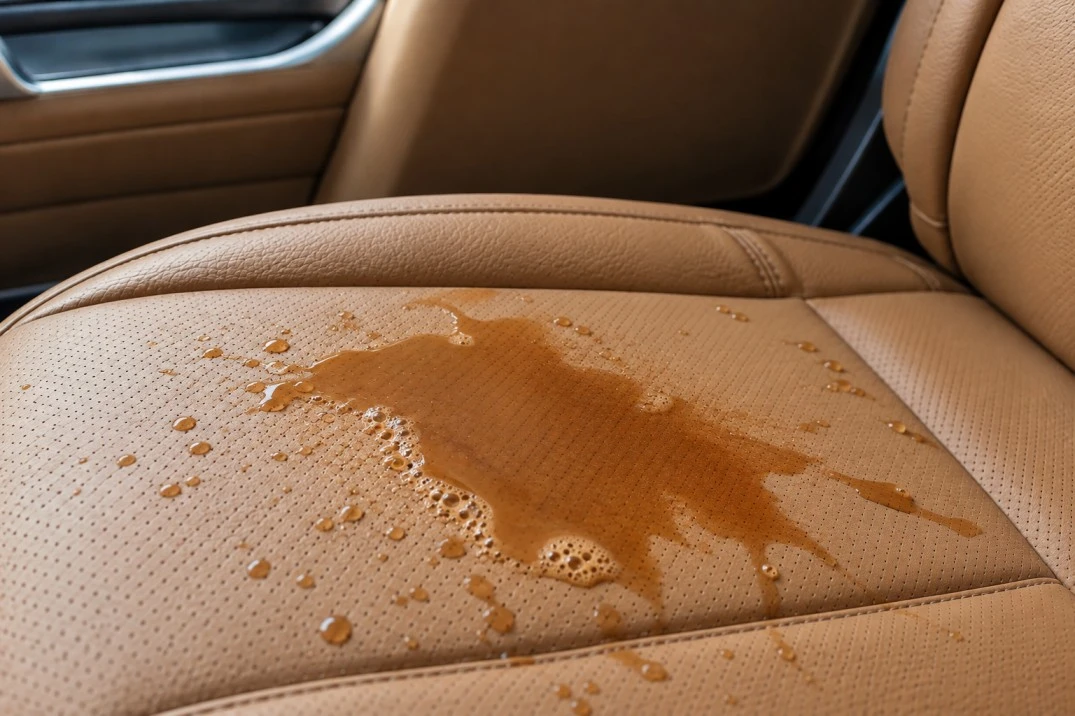
You're mid-commute, the cup shifts, and suddenly there's coffee everywhere — seat, carpet, maybe the console. The first thing most people do is panic and start blotting with whatever's on hand: a napkin, a fast food bag, a sleeve. The next thing they do is Google "coffee spill car seat" from the parking lot, still holding a soggy napkin.
If that's you right now — good, you're in the right place, and the next 10 minutes matter more than you think.
At Shine Drive Detailing, coffee spills are one of the most common emergency calls we get. Here's exactly what to do right now, why the smell tends to come back even after it looks clean, and when it's worth calling in professional help the same day.
Why Coffee Spills Are Worse Than They Look
Here's something most people don't realize until it's too late: coffee spreads much farther than what you can see on the surface.
The moment coffee hits your seat or carpet, it doesn't just sit on top of the fabric — it starts wicking downward and outward into the foam padding and carpet backing underneath. By the time you've grabbed a towel, a spill that looked like a 4-inch circle on the surface may already be soaked several inches wider underneath, in the padding you can't see or reach with a napkin.
This is exactly why so many coffee stains seem to "come back" days later, or why the smell lingers even after the seat looks dry and clean on top. The coffee that wicked into the foam is still in there, and it's not going anywhere on its own.
The First 10 Minutes: What to Actually Do
Speed matters more than technique here. Here's the order of operations:
1. Blot — don't rub. Grab a clean, absorbent cloth or paper towels and press straight down onto the spill. Rubbing pushes the liquid deeper into the fibers and spreads the stain outward — the opposite of what you want.
2. Soak up as much liquid as possible. Keep switching to a dry section of cloth and repeat. If you have a wet/dry vehicle vacuum or shop vac, this is the moment to use it — pulling liquid out mechanically is far more effective than blotting alone, especially on carpet.
3. Avoid hot water or heat. It's tempting to use hot water to "dissolve" the stain faster, but heat actually sets coffee stains by helping the tannins bind to the fabric. Stick to cool or room-temperature water for any rinsing.
4. Do a light cool-water rinse, then blot again. A small amount of cool water on a clean cloth, dabbed (not soaked) onto the area, helps dilute what's left before it dries. Follow immediately with dry blotting.
5. Leave the area open to air, not sealed in. If it's a seat, leave the door open or the windows cracked so the area can start drying instead of trapping moisture (and odor) inside a closed cabin.
Do this within the first 10–15 minutes and you'll dramatically reduce how deep the stain sets — but for milk-based or sweetened coffee, there's another problem waiting.
The Milk & Sugar Problem (This Is the Part Most People Miss)
Black coffee is bad enough. But if there's milk, cream, or sugar in that drink, the stakes go up significantly.
Drinks with milk or sugar are far more likely to leave a lingering odor if they aren't thoroughly extracted from the fabric — even if the visible stain is gone. Sugar residue attracts moisture and can leave a slightly sticky, dulled patch on fabric or leather long after the coffee color has faded. Milk, meanwhile, sours. That's the smell people usually can't figure out a few days later — it's not the coffee anymore, it's what the milk left behind, breaking down inside the padding.
Blotting the surface removes the visible stain. It does not remove the sugar and milk solids sitting in the foam below — and that's what keeps producing odor days or even weeks after the spill looks "cleaned up."
Why Wiping the Surface Isn't Enough
This is the part that surprises most people: once coffee — especially milk or sugar coffee — has soaked into the foam padding or carpet backing, no amount of surface wiping, spray cleaner, or air freshener actually resolves it.
You can clean the top of the fabric perfectly and still have contamination sitting an inch below the surface, slowly off-gassing odor every time the cabin heats up in the sun. This is why so many DIY coffee spill fixes "work" for a few days and then the smell creeps back — because the actual source was never removed, just masked.
This is where professional hot-water extraction makes the difference DIY methods can't. Professional extraction equipment forces hot water and cleaning solution deep into the padding and then immediately pulls it back out under vacuum pressure — physically removing the coffee, milk, and sugar residue from inside the material, not just the surface. It's the only method that reliably reaches contamination that's already wicked below the fabric.
In our experience, spills treated with prompt at-home blotting and a professional extraction within a day or two almost always come out completely — no stain, no odor. Spills left to sit for a week or more, especially milk-based drinks, are far more likely to leave a permanent shadow stain or a smell that keeps returning no matter how many times you clean the surface.
When to Call a Professional (And Why Same-Day Matters)
If any of these apply, it's worth booking a professional interior clean the same day or next day rather than waiting:
- The spill included milk, cream, or a sweetened coffee drink
- It's soaked into cloth seats, carpet, or a floor mat with padding underneath
- You weren't able to treat it within the first hour
- It's a leather seat (coffee can stain and dry out leather if not treated correctly — this is not a "just wipe it" situation)
- You can still smell it a day or two later, even though it looks clean
The sooner professional extraction happens after a spill, the less likely the stain or odor becomes permanent. This is genuinely a case where waiting a week "to deal with it later" often turns a same-day fix into a much harder job.
At Shine Drive Detailing, our interior detailing service includes hot-water extraction specifically for situations like this — fresh spills, set-in stains, and lingering odors from milk, coffee, and other drink spills. We've handled enough of these calls to know exactly where coffee tends to travel in a seat and how to fully pull it out, not just mask it.
Final Thoughts
Coffee spills are stressful in the moment, but they're also one of the most fixable interior emergencies — if you act fast and understand what's actually happening underneath the surface. Blot immediately, avoid heat, and don't assume "it looks clean now" means the problem is gone, especially with milk or sugar involved.
If you're staring at a fresh spill right now, do the first-response steps above immediately, then get it into professional hands as soon as you can. And if it's been sitting for a few days and the smell won't quit, that's still very fixable — it just needs proper extraction, not another spray bottle.
Book a same-day interior detailing appointment with Shine Drive Detailing and let us pull the spill out for good, before it becomes a permanent stain or smell.
Dealing with other interior messes too? Check out our guides on removing winter salt stains from your car's interior and why pet hair never fully comes out on its own.
Ready to Experience Professional Car Detailing?
Don't wait to give your vehicle the care it deserves. Our expert detailing services will transform your car inside and out.
Related Articles

Fleet Car Detailing in Canada: The Complete 2026 Guide to Protecting Your Vehicles, Your Brand, and Your Bottom Line
Your fleet is a moving billboard — and a depreciating asset. Here's what professional fleet detailing actually includes, how often …

Can Detailing Actually Increase Your Car’s Resale Value?
A professionally detailed car often looks newer, cleaner, and better maintained to buyers. Learn how detailing can improve resale appeal, …
The Ultimate Time-Saving Guide to Mobile Car Detailing for Kitchener Professionals
Maximize your productivity in the KW tech hub with our specialized mobile detailing guide for professionals. Learn how our self-contained …